
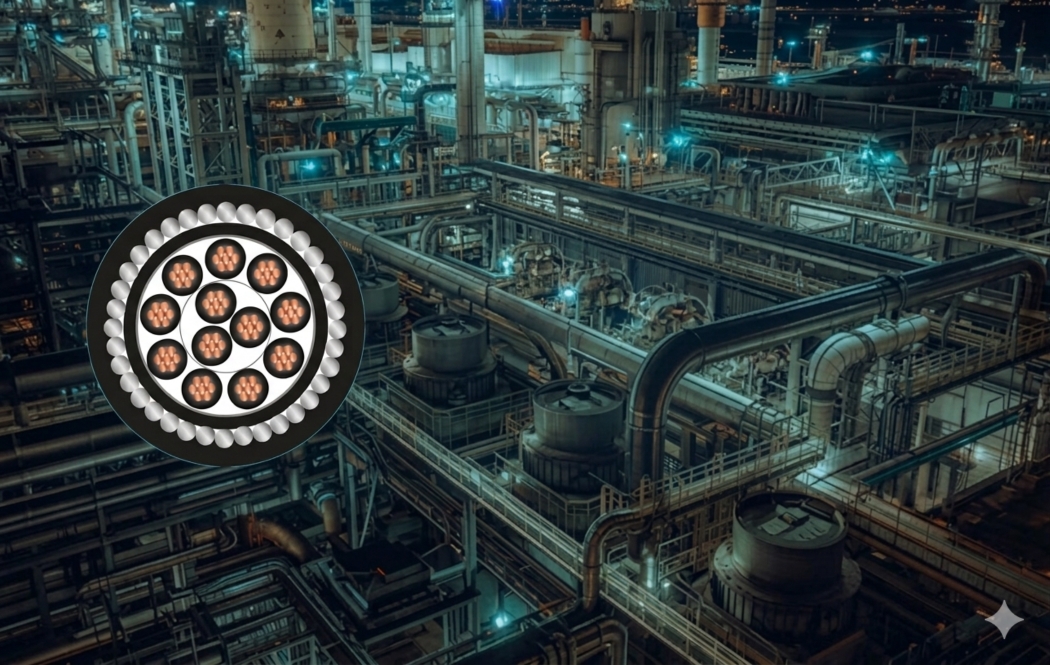
Every time you switch on a light, start a machine, or power a building, electricity travels through a power cable to get there. Power cables are the silent backbone of every electrical system, from a simple household socket to a high-voltage transmission grid. Yet for most people, they remain invisible and poorly understood.
Whether you are an electrical engineer, a procurement professional, a project manager, or someone planning a new installation, understanding power cables helps you make smarter, safer, and more cost-effective decisions. This guide covers everything you need to know what power cables are, the types available, where they are used, their benefits, and how to choose the right one.
1. What is a Power Cable?
A power cable is an electrical assembly used to transmit or distribute electrical energy from one point to another. At its core, it consists of one or more insulated conductors bundled together and protected by one or more outer layers. Each component plays a critical role in ensuring safe and efficient power delivery.
Power cables are engineered to handle a wide range of voltages, from low-voltage domestic wiring at 240V all the way to extra-high-voltage transmission lines at 66kV and above. The specific design, insulation material, and construction vary based on the application, installation environment, and voltage requirements.
Key Components of a Power Cable
| Component | Material | Function |
|---|---|---|
| Conductor | Copper or Aluminium | Carries the electrical current |
| Insulation | XLPE, PVC, Rubber | Prevents current leakage; provides dielectric protection |
| Inner Sheath / Bedding | PVC, LSZH | Protects insulation during armouring process |
| Armour | Steel Wire / Steel Tape | Provides mechanical protection against impact and crushing |
| Outer Sheath | PVC, LSZH, HDPE | Shields against moisture, UV exposure, and chemicals |
2. How many types of Power Cables are there?
Power cables are classified based on voltage rating, insulation material, conductor type, and installation method. Below is a complete breakdown of the major categories used across industries in India and globally.
A. Based on Voltage Rating
| Category | Voltage Range | Common Applications | Key Standard |
|---|---|---|---|
| Low Tension (LT) | Up to 1.1 kV | Homes, offices, light industry | IS 1554 / IS 7098 Part 1 |
| High Tension (HT) | 1.1 kV to 11 kV | Industrial plants, transformers | IS 7098 Part 2 |
| Super Tension (ST) | Up to 33 kV | Power substations, grid networks | IEC 60502-2 |
| Extra High Voltage (EHV) | 66 kV and above | Transmission lines, large utilities | IEC 60840 |
B. Based on Insulation Material
LT XLPE Power Cables
• Insulated with Cross-Linked Polyethylene (XLPE) for superior thermal and electrical performance.
• Rated up to 1.1 kV. Suitable for residential and light industrial power distribution.
• Operates continuously at 90°C, significantly better than PVC cables.
• Complies with IS 7098 (Part 1) and IEC 60502-1.
HT XLPE Power Cables
• Designed for medium and high voltage systems from 3.3 kV to 33 kV.
• Used in power stations, substations, and large industrial complexes.
• XLPE insulation handles high dielectric stress efficiently, reducing energy losses.
• Complies with IS 7098 (Part 2) and IEC 60502-2.
PVC Power Cables
• Insulated with Polyvinyl Chloride (PVC) — the most widely used insulation material for standard wiring.
• Cost-effective, flexible, and moisture resistant. Rated up to 1.1 kV.
• Ideal for household wiring, lighting circuits, and small commercial applications.
• Complies with IS 1554 (Part 1).
66 kV High Voltage Power Cables
• Extra-high voltage cables designed for long-distance power transmission.
• Built with multi-layer XLPE insulation and heavy-duty armour for harsh environments.
• Used by utilities, power grid operators, and large infrastructure projects.
C. Based on Construction and Protection
| Construction Type | Description | Best Suited For |
|---|---|---|
| Armoured (SWA / AWA) | Steel Wire or Aluminium Wire Armoured cables with robust mechanical protection | Underground burial, rocky terrain, industrial environments |
| Unarmoured | Lighter cables without armour, easy to install and handle | Conduit runs, indoor wiring, low-risk environments |
| Fire-Resistant | Maintains electrical integrity during fire exposure | Emergency systems, alarm circuits, safety-critical equipment |
| LSZH (Low Smoke Zero Halogen) | Emits minimal toxic smoke and no halogens in fire | Tunnels, metro stations, hospitals, schools, airports |
D. Based on Conductor Material
| Conductor | Advantages | Best Used For |
|---|---|---|
| Copper | High conductivity, compact size, higher current capacity, longer service life | Industrial machinery, critical systems, heavy-duty indoor wiring |
| Aluminium | Lightweight, economical, suitable for large cross-sections | Overhead lines, long-distance transmission, utility infrastructure |
3. Where Are Power Cables Used? (Applications)
Power cables are found in virtually every sector that depends on electricity. Their applications span individual households to large-scale national infrastructure. Below is a sector-wise overview.
| Sector | Typical Applications | Cable Type Commonly Used |
|---|---|---|
| Residential | Home wiring, lighting circuits, appliance connections | LT PVC / LT XLPE Unarmoured |
| Commercial | Offices, malls, hospitals, hotels, shopping centres | LT XLPE, Fire-Resistant, LSZH |
| Industrial | Motors, control panels, heavy machinery, factory floors | HT XLPE, Armoured Cables |
| Power Utilities | Substations, distribution networks, grid interconnects | HT / EHV XLPE, 66 kV Cables |
| Infrastructure | Metro rail, tunnels, airports, highways | LSZH, Fire-Resistant, Armoured |
| Renewable Energy | Solar farms, wind turbines, energy storage systems | UV-resistant LT/HT XLPE |
| Oil & Gas | Offshore platforms, refineries, petrochemical plants | Flame-retardant armoured cables |
The correct cable for each application is determined not just by the load and voltage requirements, but also by the installation environment: whether the cable will be buried underground, exposed to chemicals, subject to mechanical stress, or installed in a fire-sensitive location.
4. Benefits of using quality Power Cables
Investing in the right power cable from a certified manufacturer delivers measurable advantages in safety, efficiency, and long-term cost savings.
Investing in the right power cable from a certified manufacturer delivers measurable advantages in safety, efficiency, and long-term cost savings.
• Electrical Safety: High-grade insulation prevents current leakage, short circuits, and electrical fires. Cables manufactured to IS, IEC, or ASTM standards provide consistent dielectric protection even under load stress.
• Energy Efficiency: Cables with the correct conductor cross-section minimise resistive losses, reducing energy waste and lowering electricity bills over time.
• Durability and Long Service Life: XLPE-insulated cables operate reliably for 30 years or more. Armoured constructions resist mechanical damage, moisture, and chemical exposure.
• Thermal Resistance: XLPE insulation maintains electrical properties at high operating temperatures (up to 90°C continuously), suitable for demanding industrial environments.
• Reduced Maintenance Costs: Quality cables require fewer replacements and repairs, reducing downtime and maintenance expenditure over the life of the installation.
• Fire Safety Compliance: Fire-resistant and LSZH cables limit fire spread, protect lives, and help meet building code and insurance requirements.
• Versatility: A broad product range — from LT PVC to 66 kV XLPE — means the right cable exists for every application, voltage, and installation condition.
• Environmental Responsibility: Modern cables manufactured with halogen-free or recyclable materials reduce environmental impact during both operation and end-of-life disposal.
5. How to choose the right Power Cable
Selecting the wrong cable can lead to energy losses, premature failure, safety hazards, or non-compliance with regulations. Use the following eight-step framework to make an informed decision.
- Determine the Voltage Requirement: Identify whether your system operates at low tension (up to 1.1 kV), high tension (up to 33 kV), or extra-high voltage (66 kV+). Always choose a cable with a voltage rating that meets or exceeds your system’s requirement.
- Calculate the Current-Carrying Capacity: The conductor cross-section must be sufficient to carry the load current without excessive heating. Refer to IS 3961 or IEC 60364 tables and apply derating factors for installation method, ambient temperature, and grouping.
- Choose the Right Conductor Material: Opt for copper when space is limited, high reliability is critical, or loads are heavy. Choose aluminium for long-distance runs, overhead lines, or when cost is a primary concern.
- Select the Appropriate Insulation: Use XLPE for high-temperature environments and industrial applications. Use PVC for standard residential and light commercial wiring where cost-effectiveness is the priority.
- Assess the Installation Environment: Underground or direct burial installations require armoured cables. Indoor conduit runs can use unarmoured cables. Outdoor runs need UV-resistant sheaths. Chemical environments require special outer sheath materials.
- Check Fire Safety Requirements: For hospitals, public buildings, data centres, and tunnels, opt for fire-resistant or LSZH cables to comply with safety codes and minimise risk in emergencies.
- Verify Compliance with Standards: Ensure the cable is manufactured to the applicable standard: IS 7098 / IS 1554 for India, IEC 60502 for international projects, or BS 5467 / BS 6724 for British-standard projects. Buy only from BIS-certified manufacturers.
- Consider Total Cost of Ownership: Do not select a cable based on purchase price alone. Factor in energy losses, expected lifespan, maintenance costs, and the cost of downtime or failure. A premium cable often delivers significantly lower total cost over its service life.
Quick Selection Reference Table
| Application | Recommended Cable | Conductor | Key Feature |
|---|---|---|---|
| Home wiring | LT PVC (1.1 kV) | Copper | Flexible, cost-effective |
| Office / commercial building | LT XLPE Unarmoured | Copper | Thermal stability, safety |
| Underground distribution | LT/HT XLPE Armoured | Aluminium or Copper | Mechanical protection |
| Industrial plant | HT XLPE (11-33 kV) | Copper | High current capacity |
| Power transmission grid | 66 kV XLPE | Aluminium | Long-distance, low loss |
| Hospitals / public buildings | Fire-Resistant / LSZH | Copper | Fire safety, low smoke |
6. Frequently Asked Questions (FAQs)
Q1. What is the difference between LT and HT power cables?
LT (Low Tension) cables are designed for voltages up to 1.1 kV and are used in homes, offices, and light industrial setups. HT (High Tension) cables operate at voltages from 1.1 kV up to 33 kV and are used in industrial plants, power transformers, and substations. HT cables use thicker insulation layers and are built to handle significantly higher electrical stress.
Q2. Is XLPE better than PVC for power cables?
In most industrial and commercial applications, yes. XLPE offers superior thermal performance (operating up to 90°C continuously versus 70°C for PVC), better electrical properties, and a longer service life. PVC cables are more cost-effective and perfectly suitable for standard residential wiring where these higher performance characteristics are not required.
Q3. When should I use armoured cables?
Use armoured cables whenever the cable is exposed to mechanical stress or physical damage risks. This includes underground direct burial, installations in rocky terrain, industrial environments, concrete embedment, and locations where the cable may be subject to impact, crushing, or rodent attack. Armoured cables with steel wire (SWA) or aluminium wire (AWA) provide robust protection in these conditions.
Q4. How do I determine the correct cable size (cross-section)?
Cable sizing depends on three factors: the load current (in amperes), the acceptable voltage drop over the cable length, and the short-circuit current the cable must withstand. The cable’s current-carrying capacity must exceed the load current after applying derating factors for installation method, ambient temperature, and grouping. Refer to IS 3961 or IEC 60364 for detailed sizing calculations or consult a qualified electrical engineer.
Q5. What does “voltage rating” of a cable mean?
The voltage rating (expressed as U₀/U, for example 0.6/1 kV) indicates the maximum operating voltage between phase and earth (U₀) and between phases (U) that the cable is designed to withstand safely. Always ensure the cable’s voltage rating meets or exceeds the system voltage of your installation. Using an undersized voltage rating risks insulation breakdown and electrical failure.
Q6. Can copper and aluminium cables be used interchangeably?
Not directly. Aluminium has lower conductivity than copper, so an aluminium cable needs a larger cross-section to carry the same current. For example, a 16 mm² aluminium cable is roughly equivalent in capacity to a 10 mm² copper cable. Special connectors are also required when joining copper and aluminium conductors to prevent galvanic corrosion. Always consult specifications before substituting conductor materials.
Q7. What standards should I look for when purchasing power cables in India?
For Indian installations, look for cables certified to IS 1554 (PVC insulated cables) or IS 7098 (XLPE insulated cables). For international projects, IEC 60502 is the globally accepted standard. British-standard projects should use BS 5467 or BS 6724. Always purchase from manufacturers who hold valid BIS (Bureau of Indian Standards) certification and can provide third-party test reports.
Q8. What is LSZH and where is it required?
LSZH stands for Low Smoke Zero Halogen. These cables emit minimal smoke and no halogenic gases when exposed to fire, reducing the risk of toxic inhalation in enclosed spaces. They are mandatory or strongly recommended in metro rail systems, tunnels, airports, hospitals, schools, and other public buildings where rapid evacuation may be required in a fire emergency. LSZH cables comply with standards such as IEC 60332 and BS 6724.
Conclusion
Power cables are far more than simple conductors. They are precision-engineered products that determine the safety, efficiency, and reliability of every electrical system they serve. Choosing the correct cable, the right voltage rating, insulation type, conductor material, and construction is one of the most important decisions in any electrical project.
Whether you need LT XLPE cables for a residential complex, HT armoured cables for an industrial plant, or 66 kV high-voltage cables for grid-level transmission, the right product must meet both your technical requirements and the applicable safety standards.
For over a decade, Elegar Kerpen has been the trusted partner for industrial facilities seeking reliable, high-performance power cable solutions. Our team of certified engineers specializes in designing and implementing custom cable systems that ensure maximum power transmission efficiency, reduce energy losses, and guarantee uninterrupted electrical system performance.
From detailed site audits and optimized cable routing to professional installation support and ongoing technical assistance, Elegar Kerpen provides power cable solutions tailored to your facility’s specific requirements. Whether upgrading existing electrical infrastructure or planning a greenfield project, our expertise helps improve power distribution efficiency while minimizing downtime, reducing energy losses, and lowering maintenance costs.
Ready to optimize your Power Distribution System?
📞 Phone: +91 70309 63540
📧 Email: contact@elegar-kerpen.com
Schedule your free power cable assessment today and let our experts design a solution that keeps your electrical systems running flawlessly. Our facility audit includes load analysis, voltage drop calculations, thermal imaging assessment, and a customized cable specification plan tailored to your operational and budget requirements.
About Elegar Kerpen
Elegar Kerpen is a trusted industrial cable solutions provider with extensive hands-on experience supporting automation engineers and facility managers across a broad range of industries. Our technical team recommends and supplies the right cable for your network requirements, environment and performance targets, and delivers certified, specification-compliant cable backed by technical support from enquiry through to commissioning.
Get in touch with us:
Phone: +91 70309 63540
Email: contact@elegar-kerpen.com
More for you to read