
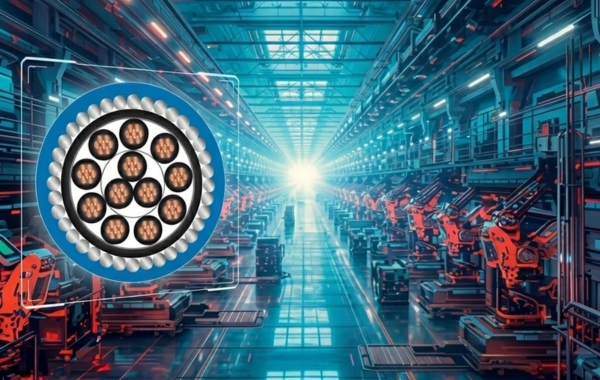
Choosing the wrong cable causes system failures, costly downtime, and safety risks. Control cables are the backbone of every modern industrial and smart infrastructure system. They carry low-voltage signals that command machines, automate processes, and connect systems across buildings, factories, and cities.
Industries such as manufacturing, building automation, energy, HVAC, robotics, and public infrastructure rely on control cables daily.
This guide covers each cable type, its key features, and the best applications — helping engineers, procurement teams, and project managers make the right choice every time.
What is a Control Cable?
A control cable is a multi-conductor cable designed to transmit low-voltage electrical signals. These signals operate, control, and monitor equipment and machinery.
Control cables are different from power cables. Power cables deliver high-voltage electricity to run equipment. Control cables send the commands that tell equipment what to do.
They typically operate at voltages up to 1000V AC. They are used in control panels, automation systems, instrumentation circuits, and safety systems worldwide.
Types of Control Cables Explained
Every control cable is engineered for a specific environment, function, and performance requirement. Knowing the differences helps you select the right cable — and avoid costly mistakes on site.
PVC Insulated Control Cables
PVC (Polyvinyl Chloride) is the most commonly used insulation material in control cables.
These cables are cost-effective, lightweight, and easy to install. They offer good flexibility and resistance to moisture and chemicals in standard environments.
Key Features:
- Voltage rating: up to 1000V AC
- Operating temperature: -15°C to +70°C
- Flame retardant
- Complies with IEC 60227
Best For: Control panels, switchboards, building automation systems, CCTV and security systems, lighting control circuits
XLPE Insulated Control Cables
XLPE (Cross-Linked Polyethylene) insulated control cables offer superior performance over standard PVC cables.
XLPE insulation withstands higher temperatures and offers better chemical resistance. It also provides a higher current-carrying capacity than PVC.
Key Features:
- Operating temperature: up to +90°C
- Excellent resistance to heat, chemicals, and moisture
- Higher current rating than PVC
- Complies with IEC 60502
Best For: Power stations, outdoor industrial plants, refineries, high-temperature environments, heavy-duty industrial applications
Why This Matters: XLPE cables last longer and perform better in harsh conditions. They reduce replacement costs and improve system reliability.
Shielded / Screened Control Cables
Shielded control cables contain a metallic layer around the conductors. This layer blocks electromagnetic interference (EMI) and radio frequency interference (RFI).
Shielding comes in three forms:
- Foil Shield — Aluminium foil wrapped around conductors
- Braided Shield — Woven tinned copper wire mesh for stronger protection
- Combination Shield — Foil + braid for maximum EMI protection
Key Features:
- Blocks EMI and EMC effectively
- Maintains signal integrity in noisy environments
- Available with drain wire for easy grounding
- Complies with IEC 60228
Best For: PLCs (Programmable Logic Controllers), VFD drives, instrumentation circuits, automation systems near motors, factories with heavy electrical equipment
Quick Tip: Always use a shielded control cable when running signal wires near motors, drives, or high-frequency equipment.
Armoured Control Cables
Armoured control cables have a layer of steel wire or steel tape around the cable core. This armour provides strong mechanical protection.
Two common types of armour are:
- SWA (Steel Wire Armoured) — Provides all-round mechanical protection
- STA (Steel Tape Armoured) — Provides protection against crushing forces
Key Features:
- High resistance to crushing, impact, and rodent damage
- Suitable for direct burial
- Strong protection in harsh mechanical environments
- Complies with IEC 60502
Best For: Underground cable installations, outdoor projects, overhead lines, industrial zones with heavy machinery and physical cable hazards.
Flexible Control Cables
Flexible control cables are built for movement. They use high-strand conductors that bend repeatedly without breaking.
Standard cables crack and fail under repeated movement. Flexible cables are engineered to handle this challenge. They are also available with oil-resistant and abrasion-resistant outer jackets.
Key Features:
- High-strand fine wire conductors
- Designed for repeated and continuous bending
- Oil and abrasion-resistant variants available
- Complies with IEC 60228 Class 5 or 6
Best For: Industrial robots, drag chain systems, mobile machinery, cranes, conveyors, and any application involving continuous cable movement.
Fire Resistant Control Cables
Fire resistant control cables maintain full circuit operation during a fire.
In a fire emergency, these cables continue to power safety-critical systems such as emergency lighting, fire alarms, sprinklers, and evacuation systems. This performance can save lives.
Key Features:
- Maintains circuit integrity at temperatures up to 950°C
- Tested to IEC 60331 standards
- Available with additional flame-retardant properties
- Often combined with LSZH jacket for extra safety
Best For: Hospitals, emergency lighting systems, fire alarm circuits, evacuation systems, tunnels, airports, and all safety-critical infrastructure.
Low Smoke Zero Halogen (LSZH) Control Cables
LSZH control cables are designed to protect human life in fire situations.
When ordinary cables burn, they release toxic halogen gases and thick black smoke. These gases are more dangerous than the fire itself in enclosed spaces. LSZH cables produce minimal smoke and zero halogen gases when exposed to fire.
Key Features:
- Emits minimal smoke during fire
- Produces zero halogen gases
- Reduces toxic hazard for occupants and emergency responders
- Complies with IEC 60754 and IEC 61034
Best For: Metro stations, shopping malls, airports, theatres, schools, railway hubs, tunnels, and any densely populated or enclosed public spaces
Did You Know? Many countries now mandate LSZH cables in public infrastructure by law. Always check local fire safety regulations before specifying cable type.
Composite Control Cables
Composite control cables combine power conductors and data or signal cores within a single cable jacket.
Traditional projects require separate cables for power supply and data transmission. Composite cables eliminate this complexity. They reduce cable count, save installation space, and lower project costs.
Key Features:
- Combines power and data/signal conductors in one cable
- Reduces cable tray space and installation time
- Simplifies wiring in complex projects
- Available with shielding for signal protection
Best For: Smart airports, industrial IoT systems, large-scale infrastructure projects, smart building systems, and anywhere that requires simultaneous power and data transmission
Quick Comparison: Control Cable Types at a Glance
| Cable Type | Key Feature | Typical Voltage | Best Application |
|---|---|---|---|
| PVC Insulated | Cost-effective, flexible | Up to 1000V AC | Panels, switchboards, CCTV |
| XLPE Insulated | Heat & chemical resistant | Up to 1000V AC | Power plants, outdoor industrial |
| Shielded/Screened | EMI/EMC protection | Up to 1000V AC | PLCs, VFDs, instrumentation |
| Armoured (SWA/STA) | Mechanical protection | Up to 1000V AC | Underground, outdoor harsh zones |
| Flexible | Repeated bending | Up to 1000V AC | Robots, drag chains, cranes |
| Fire Resistant | Circuit integrity in fire | Up to 1000V AC | Emergency systems, hospitals |
| LSZH | No toxic smoke or gases | Up to 1000V AC | Metros, malls, tunnels, schools |
| Composite | Power + data in one cable | Varies by design | Airports, smart infrastructure |
How to Choose the right Control Cable
Selecting the right control cable type depends on six key factors:
1. Voltage & Current Rating Match the cable rating to your system’s electrical specifications. Never underrate.
2. Installation Environment Indoor or outdoor? Underground or aerial? Chemical exposure? Choose insulation and armour accordingly.
3. Flexibility Requirements Static installation needs standard cables. Moving machinery requires flexible control cables with high-strand conductors.
4. EMI and Signal Interference Is the cable running near motors or drives? Use a shielded control cable to protect signal integrity.
5. Fire Safety Compliance Check local regulations. Public buildings and enclosed spaces often require fire resistant or LSZH control cables by law.
6. Single Function vs. Multi-Function If your project needs both power and data, a composite control cable reduces installation complexity and cost.
Frequently Asked Questions (FAQ)
Q1: What is the difference between a control cable and a power cable?
A control cable carries low-voltage signals to operate or monitor equipment. A power cable delivers high-voltage electricity to run the equipment. They serve different functions and must never be substituted for each other.
Q2: When should I use a shielded control cable?
Use a shielded control cable whenever signal wires run near motors, VFDs, inverters, or any source of electromagnetic interference. Shielding prevents signal distortion and communication errors.
Q3: What is the difference between fire resistant and LSZH control cables?
A fire resistant cable maintains circuit operation during a fire. An LSZH cable minimises toxic smoke and halogen gas emission during a fire. High-risk installations often require cables that meet both standards.
Q4: What are composite control cables used for?
Composite control cables carry both power and data signals inside a single jacket. They are ideal for smart airports, industrial IoT systems, and large infrastructure projects where running separate cable types is impractical or expensive.
Q5: Can armoured control cables be installed underground?
Yes. SWA (Steel Wire Armoured) control cables are specifically designed for underground and direct burial applications. The steel armour protects against mechanical damage, moisture, and rodent attacks.
Q6: What certifications should I look for in control cables?
Look for UL listing, IEC 60227, IEC 60502, IEC 60331 (fire resistance), IEC 60754 (halogen-free), and RoHS compliance. Certifications confirm the cable meets tested and verified safety standards for your region and application.
Q7: Are XLPE cables better than PVC cables?
XLPE cables offer better performance than PVC cables in high-temperature, outdoor, and chemical environments. PVC cables are more cost-effective for standard indoor applications. Choose based on your specific environmental conditions.
Conclusion
The right control cable is not a minor decision. It directly impacts system reliability, safety compliance, and total installation cost.
From PVC and XLPE to LSZH and composite, each cable type serves a specific environment and performance requirement. Understanding these differences ensures your systems run safely, efficiently, and without interruption.
Always consult a cable specification expert before finalising your selection — especially for complex, safety-critical, or large-scale industrial projects.
Need Help Selecting the Right Control Cable?
Every project has unique demands. The wrong cable specification leads to signal failure, safety risks, and expensive rework.
Elegar Kerpen manufactures premium control cables engineered to exact industry standards — from PVC and XLPE insulated cables to shielded, armoured, fire resistant, LSZH, flexible, and composite variants. All products are certified under UL and IEC 60227.
Whether you need a shielded cable for a PLC panel, an armoured cable for underground runs, an LSZH cable for a metro station, or a composite cable for smart infrastructure — our technical team will identify the right solution for your exact application.
- Complimentary cable specification reviews
- Custom assemblies for any application
- Samples and competitive quotes on request
- Expert guidance from a certified technical team
- UL and IEC 60227 certified control cables
Elegar Kerpen — The Quality Connection
📞 Phone: +91 70309 63540 📧 Email: contact@elegar-kerpen.com
About Elegar Kerpen
Elegar Kerpen is a trusted industrial cable solutions provider with extensive hands-on experience supporting automation engineers and facility managers across a broad range of industries. Our technical team recommends and supplies the right cable for your network requirements, environment and performance targets, and delivers certified, specification-compliant cable backed by technical support from enquiry through to commissioning.
Get in touch with us:
Phone: +91 70309 63540
Email: contact@elegar-kerpen.com
More for you to read