
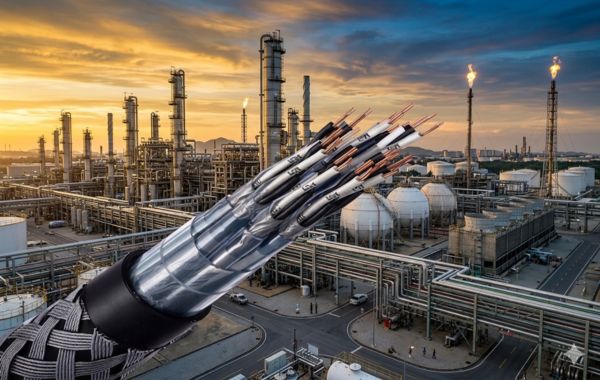
Selecting the wrong instrumentation cable can cost your business thousands in downtime, measurement errors, and equipment failures. In critical industrial applications—from process control systems to HVAC installations—cable performance directly impacts signal integrity and operational reliability.
This comprehensive guide walks you through the essential specifications, cable types, and industry-specific recommendations to ensure you select the right cable for every application. Whether you’re managing HVAC systems, power plants, or medical equipment, understanding these fundamentals will help you make informed purchasing decisions and avoid costly mistakes.
Why Cable Selection Matters for Instrumentation
Many facility managers underestimate the importance of proper instrumentation cable selection. However, the reality is stark:
Signal Integrity: Poor cable choices introduce electromagnetic interference (EMI) and signal degradation, leading to inaccurate readings from sensors and transmitters. In manufacturing plants, this translates to quality control failures.
Cost of Failure: A single cable failure requiring emergency replacement, along with downtime costs, can exceed $10,000–$50,000 depending on the industry. Quality cable investments typically pay for themselves within months.
Compliance & Safety: Different industries mandate specific instrumentation cable standards (ISO, UL, IEC). Non-compliance can result in regulatory fines, failed audits, or safety hazards.
Long-Term Performance: Investing in the right cable specification ensures 5–20+ years of reliable operation without performance degradation.
Key Cable Specifications to Consider
Before selecting instrumentation cable, you must understand critical technical specifications. Here’s what each parameter means and why it matters:
| Specification | What It Means | Why It Matters |
|---|---|---|
| Shielding Type | Single/Double/Foil/Braid | Protects against electromagnetic interference (EMI) in industrial environments |
| Conductor Gauge (AWG) | Wire thickness (smaller number = thicker wire) | Determines signal strength and voltage drop over distance |
| Impedance (Ohms) | Electrical resistance characteristic | Ensures signal accuracy; mismatch causes reflection and data corruption |
| Jacket Material | PVC, PTFE, Polyurethane, or Rubber | Determines temperature range, chemical resistance, and durability |
| Operating Temperature | Range from -40°C to +250°C | Must match environmental conditions to prevent insulation breakdown |
| Cable Length | Distance requirements | Longer runs require lower impedance or thicker conductors to minimize signal attenuation |
Pro Tip: Always cross-reference your equipment’s datasheet specifications with cable parameters. A mismatch in impedance—even by a few ohms—can degrade signal quality in digital applications.
Classification of Instrumentation Cables
Understanding cable architecture is essential for matching applications to the right product:
Twisted Pair Cables
The most common instrumentation cable type, twisted pair reduces noise through conductor geometry. Ideal for analog signals in temperatures up to 80°C. Best for short-to-medium distances (under 500 feet).
Shielded Twisted Pair (STP)
Adds a conductive shield around twisted pairs, providing superior EMI protection. Recommended for harsh industrial environments with heavy electrical equipment nearby.
Coaxial Cables
Used for high-frequency signals (RF applications, video). The coaxial design (inner conductor surrounded by shield) maintains impedance consistency, crucial for signal fidelity over distance.
Multi-conductor Cables
Combines multiple signal pairs in one jacket, reducing installation labor and material costs. Common in bundled sensor applications.
Armored & Screened Cables
Heavy-duty construction with mechanical protection. Essential for outdoor installations, cable trays, or areas with rodent risk. Temperature-rated variants available for extreme environments (-40°C to +250°C).
Common Cable Selection Mistakes to Avoid
Mistake #1: Using Standard Electrical Cable for Instrumentation
The Problem: Electrical power cables lack shielding and use different impedance values. They introduce signal noise, causing measurement inaccuracy.
The Solution: Always specify instrumentation-grade cable with proper shielding for sensor/transmitter connections.
Mistake #2: Assuming Longer Cables Always Need Thicker Gauge
The Problem: Cable gauge selection depends on impedance matching and current draw, not just length. Oversizing increases cost unnecessarily.
The Solution: Calculate voltage drop and impedance requirements first, then select gauge accordingly.
Mistake #3: Choosing Cheaper Cable as a Cost-Saving Measure
The Problem: Low-cost cables fail prematurely, requiring replacement plus emergency labor. Total cost-of-ownership is 10–100x higher than quality alternatives.
The Solution: Calculate lifetime cost, not just upfront price. Quality cable costs 20–30% more but lasts 5x longer.
Selecting Cables Based on Uses
Different industries have unique environmental and regulatory requirements:
| Industry/Application | Recommended Cable Type | Critical Specification | Typical Temperature Range |
|---|---|---|---|
| HVAC Systems | Shielded twisted pair (STP) | EMI resistance, flexibility | -20°C to +80°C |
| Process Control/Manufacturing | Multi-conductor armored | Mechanical durability, abrasion resistance | -40°C to +80°C |
| Medical Equipment | Biomedical-grade shielded | FDA compliance, low-noise characteristics | +5°C to +50°C |
| Power Generation Plants | High-temperature rated armored | Thermal stability, fire resistance | -40°C to +150°C |
| Data Centers | Screened twisted pair | Signal integrity, plenum-rated jacket | +10°C to +40°C |
| Outdoor/Harsh Environments | UV-resistant polyurethane armored | Weather resistance, UV protection | -40°C to +80°C |
Step-by-Step Cable Selection Process
Follow this checklist to systematize your cable selection:
Request Material Test Reports – For critical applications, ask suppliers for third-party testing documentation.
Identify the Signal Type – Is it analog, digital, AC, or DC? Each requires different impedance specifications.
Determine Operating Temperature Range – Check both ambient conditions and self-heating due to current draw.
Assess the EMI/RFI Environment – Industrial facilities with large motors, VFDs, or RF equipment require enhanced shielding.
Calculate Cable Length Requirements – Account for signal attenuation; longer runs may need impedance adjustments.
Review Compliance Standards – Verify ISO, UL, IEC, or industry-specific certifications (e.g., FDA for medical, NFPA for fire safety).
Consider Mechanical Stress Factors – Will cable bend, flex, or face abrasion? Select armored or rated for dynamic use.
Verify Connector Compatibility – Ensure connectors match cable specifications and equipment termination types.
Frequently Asked Questions (FAQ)
Q1: What’s the difference between shielded and unshielded instrumentation cables?
Shielded cables feature a conductive mesh or foil layer surrounding the signal conductors, blocking electromagnetic interference. Unshielded cables are cheaper but prone to signal noise in industrial environments with motors, transformers, and RF equipment. For most instrumentation applications, shielding is essential for measurement accuracy.
Q2: How do I determine what impedance my cable needs?
Check your equipment manufacturer’s specification sheet—it will state the required impedance in ohms (Ω). Common values include:
- 50Ω for RF and high-frequency applications
- 75Ω for video signals
- 110Ω for digital communications (CAN bus, Profibus)
Mismatched impedance causes signal reflection and data corruption.
Q3: Can I use instrumentation cable in outdoor installations?
Yes, but only if rated for UV exposure. Specify UV-resistant jacket materials (polyurethane preferred over PVC) and verify the temperature rating matches your climate extremes. Armored variants provide additional mechanical protection against weather damage and rodent chewing.
Q4: What does a “PUR jacket” mean, and why does it matter?
PUR (Polyurethane) jacket is a flexible, oil-resistant material rated for -40°C to +80°C and can withstand mechanical stress. It’s ideal for automotive, mobile equipment, and offshore applications. PTFE (Teflon) jackets handle higher temperatures (+200°C+) but cost more.
Q5: How often should instrumentation cables be replaced?
Quality cables last 5–20 years depending on environment and usage. Replace if you observe insulation cracking, discoloration, brittleness, or intermittent connection issues. Environmental stress (UV, chemicals, temperature cycling) accelerates aging.
Q6: Is it necessary to use brand-name cables, or are generic alternatives acceptable?
For non-critical applications, generic cables work fine. However, for mission-critical systems (medical devices, power generation, aerospace), specify branded cables with verifiable test reports. Quality Cable manufacturer provide technical support and consistent material standards.
Conclusion
Proper instrumentation cable selection is not a commodity purchase, it’s a strategic investment in system reliability, measurement accuracy, and regulatory compliance. By understanding cable specifications, recognizing common mistakes, and following a structured selection process, you’ll avoid costly failures and downtime.
When selecting the right instrumentation cable, you need a trusted partner who understands both technical specifications and real-world application challenges. Elegar Kerpen has been a leading provider of industrial-grade instrumentation cables for over 15 years, serving manufacturing plants, HVAC systems, power generation facilities, and process control operations across the globe. Our certified cables comply with ISO, UL, and IEC standards, with temperature ratings from -40°C to +250°C and expert technical support to guide your selection process.
Get Expert Guidance Today:
📞 Phone: +91 70309 63540
📧 Email: contact@elegar-kerpen.com
Request a Free Cable Selection Consultation – Contact Elegar’s technical team for personalized recommendations based on your equipment specifications. Make informed decisions with expert support, and your instrumentation systems will deliver years of reliable performance.
About Elegar Kerpen
Elegar Kerpen is a trusted industrial cable solutions provider with extensive hands-on experience supporting automation engineers and facility managers across a broad range of industries. Our technical team recommends and supplies the right cable for your network requirements, environment and performance targets, and delivers certified, specification-compliant cable backed by technical support from enquiry through to commissioning.
Get in touch with us:
Phone: +91 70309 63540
Email: contact@elegar-kerpen.com
More for you to read