
 Sunil Ranjane | December 31, 2025
Railway locomotive and coach harnesses form the backbone of electrical systems in Indian Railways, ensuring seamless power and signal transmission in high-demand environments. Manufactured by experienced wire and cable specialists such as Elegar Kerpen Kabel India Pvt. Ltd, these harnesses are built to meet strict durability and safety standards.
What is a Railway Locomotive & Coach Harness?
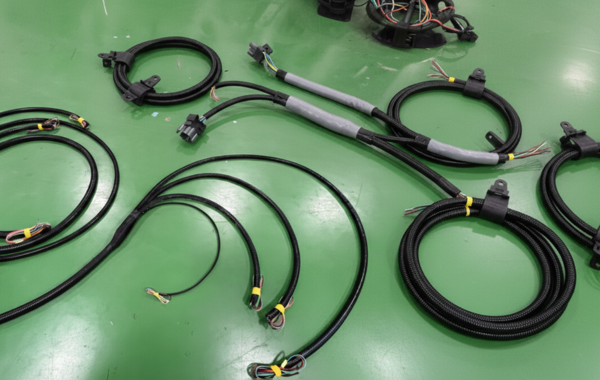
A wiring harness is an organized assembly of wires, terminals, conduits, and connectors that runs throughout the entire locomotive and coaches with various types.
Coaches Type:
- Self-Generating coach
- Second class coach
- Luggage van
- Guard Van
- Postal Van
- Double decker Coach
- Inspection carriage
- Medical Van
- Self-Propelling Tower Van
- Pantry Car
- Tourist Car
- Parcel Van
- Chair Car
- Dining Car
- Postal Car (RMS/mail Van)
- Divisional Officers, Rail Bus
- AC-I Tier (EOG)
- AC-I CC (Exe)
- AC-II CC
- AC-3 Tier (EOG)
- AC Hot Buffet
- Double Decker Chair Car
- NON-AC-3 Tier (EOG)
- NON-AC chair Car (EOG)
- NON-AC Unreserved Coach
- NON-AC (EOG) 2nd class
- Generator Car
- LHB EOG AC vista dome Coach
- LHB AC Inspection Carriage (Administrative) EOG
- Amrit Bharat Rack
- Vande Bharat
Locomotive Types:
Electric Locomotives:
- WAP Series: These are powerful electric locomotives designed for passenger services. Notable models include:
- WAP-1: Designed for the Kolkata-Delhi Rajdhani Express, it has a power output of 3900 hp.
- WAP-4: Widely used for passenger trains, known for its reliability and efficiency.
- WAP-7: One of the most successful electric locomotives, used for both passenger and freight services.
Freight Locomotives:
- WAG Series: These locomotives are specifically designed for freight operations.
- WAG-5: A widely used freight locomotive with a total of 1197 units built.
- WAG9: The most powerful freight locomotive in the Indian Railways fleet, suitable for heavy freight operations.
- WAG-12: A high-horsepower, next-generation electric freight locomotive developed for ultra-heavy haul operations.
Indian Railways continues to evolve, maintaining a diverse fleet of locomotives that cater to both passenger and freight services. The classification of locomotives is based on their gauge, motive power, and intended use, making it easier to identify their capabilities and applications.
It relays critical information and electric power, connecting diverse systems for optimal performance.
These harnesses play a pivotal role in locomotives & coaches by linking components reliably, even under vibration, heat, and moisture. Elegar Kerpen uses electron beam-irradiated, thin-walled flexible cables with copper conductors, rated for voltages up to 1800-3000V and conductor sizes from 1.5 sq mm to 300 sq mm. Compliance with ELRS/SPEC/ELC/0019 Rev.4 and EDTS 132 Rev. C ensures they handle transformers, generators, and batteries up to 4000V.
Key components include:
- Wires and cables: ELRS/SPEC/ELC/0019 REV-4 OR LATEST Specification Fire-retardant, high-flexibility designs for railway conditions.
- Terminals and crimping sockets: Per EDTS-200, EDTS-201, ICFSK-7-2-166, and ICFSK-7-2-528.
- Polyamide Conduits as per standards 61386-1&2 and ULV942 grade jackets: Managed via RDSO/SPN/189/2009 for protection.
Harness types are primarily categorized by circuit and application:
- Main circuits: Handle primary power distribution.
- Auxiliary circuits: Support secondary systems like blowers and compressors.
- Control circuits: Manage operations and sensors.
- Sensor circuits: Monitor performance metrics.
- Roof circuits: Connect overhead components.
- Battery circuits: Power backup systems.
- Earthing circuits: Ensure grounding for safety.
Design complexity ranges from:
- Simple earthing cables with basic connectors or crimping at both ends.
- Complex builds incorporating multiple conductors, sheathing, over-molds, and strain relief for advanced electrical needs.
Where Railway Locomotive Harnesses Are Used (Applications)
Locomotive harnesses integrate into conduits across critical locomotive areas, enabling efficient installation and operation. They support Indian Railways’ fleet, including freight-dedicated WAG models and passenger-focused WAP locomotives.
Primary applications include:
- Core components: SB (Super Bracket), HB (High Beam), bogie, motor, converter, compressor, blower, roof, bar, and speedometer.
- Power systems: Transformers, generators, and battery cables up to 4000V.
- Circuit integration: Linking main, auxiliary, control, sensor, roof, battery, and earthing systems.
- Locomotive models: WAG-7/9/12 (freight) and WAP-7/9 (passenger), with harnesses routed for quick assembly.
These harnesses also extend to coach-locomotive interfaces, using fire-retardant accessories for overall railway safety and smooth production.
Where Railway Coach Harnesses Are Used (Applications)
Railway coach harnesses sit at the heart of coach electrical systems. Their job is simple but critical: make installation faster, cleaner, and more reliable while meeting strict safety norms. Because coach layouts, functions, and passenger requirements vary, these harnesses are designed with coach-specific routing, connectors, and protection.
In production, coach harnesses are pre-assembled and laid through defined conduits, which reduces manual wiring on the shop floor and cuts down installation errors. What this really means is smoother manufacturing, consistent quality, and safer coaches on the track
Key application areas include:
- Safety-critical systems:
Used extensively in passenger coaches with fire-retardant accessories, these harnesses support emergency lighting, alarm systems, monitoring devices, and control circuits that directly impact passenger safety.
- Coach-specific installations:
Different coach types require different harness designs. AC coaches, non-AC coaches, LHB coaches, power cars, and special-purpose coaches all use harnesses tailored to their electrical load, layout, and functional needs.
- Power distribution:
Suitable for high-voltage applications, coach harness cables are used with transformers, generators, and battery systems, handling rated voltages up to 4000 V where required.
- Interface and interconnection points:
Harnesses ensure reliable connections between coach subsystems and interface points, enabling smooth integration during assembly and consistent performance throughout service life.
Benefits of Using Railway Locomotive Harnesses
Pre-assembled harnesses streamline railway operations by reducing on-site wiring errors and installation time. They minimize shorting risks and deliver reliable performance throughout the locomotive’s lifespan.
Major benefits include:
- Faster installation: Unique designs enable quick, smooth assembly during production.
- Enhanced safety: Fire-retardant materials protect passengers and crew; rugged builds withstand industrial stresses.
- Reliability: Standardized components per RDSO and EDTS specs ensure long-term durability.
- Cost efficiency: Reduces maintenance needs and downtime in high-traffic rail networks.
- Customization: From simple to complex designs, matching exact electrical and geometric requirements.
How to Choose the Right Railway Locomotive Harness
Selecting the optimal harness requires matching specs to your locomotive’s demands. Start with the model (e.g., WAG-9/12 for heavy freight) and circuit type.
Step-by-step guide:
- Identify locomotive model: Confirm compatibility with WAG-5/7/9/12 or WAP-4/7/9.
- Check voltage and size: Ensure 1800-4000V rating and conductor sizes (1.5-300 sq mm).
- Verify standards: Must comply with ELRS/SPEC/ELC/0019 Rev.4, EDTS 132 Rev. C, and RDSO/SPN/189/2009.
- Assess components: Include appropriate crimping (EDTS-200/201), conduits, and connectors.
- Evaluate complexity: Choose simple for earthing or advanced for multi-circuit needs.
- Consult suppliers: Partner with experts like Elegar Kerpen for custom fire-retardant builds.
Prioritize suppliers offering full traceability and testing for Railway-grade performance.
Frequently Asked Questions
Are Railway Locomotive Harnesses Safe in Industrial Settings?
Yes, they feature fire-retardant accessories and robust designs for passenger safety and reliable operation in locomotives. Built to ELRS and EDTS standards, they resist heat, vibration, and electrical faults.
Do I Need Special Joints or Terminations?
Absolutely—use crimping sockets per EDTS-200, EDTS-201, ICFSK-7-2-166, and ICFSK-7-2-528. These ensure secure, vibration-proof connections tailored to geometric and electrical requirements.
Conclusion
Railway locomotive harnesses & various types of coaches harness from Elegar Kerpen Kabel India Pvt. Ltd. represent the pinnacle of reliability for Indian Railways’ WAG-5/7/9/12 and WAP-4/7/9 7 & coaches fleets, delivering organized wiring solutions that slash installation times, boost safety with fire-retardant designs, and ensure decades-long performance under ELRS/SPEC/ELC/0019 Rev-4 or latest and EDTS 132 standards.
From simple earthing circuits to complex multi-conductor assemblies powering bogies, motors, and roof systems up to 4000V, these harnesses minimize risks and maximize efficiency, choose the right specs for your locomotive and coaches needs and transform Railway operations today.
Author
More for you to read
What is a Profibus Cable? Types, Uses, Benefits
Profibus cable is a specialized industrial communication cable used to connect field devices such as sensors, actuators, drives, and PLCs...
What Are Power Cables? Types, Uses, Benefits & Guide to Choose
Every time you switch on a light, start a machine, or power a building, electricity travels through a power cable...